When Your Dishwasher Leaves Spots and Your Soul Leaves Your Body
Hard water, scale, and the mystery of “clean” dishes that still look guilty.
You ever open the dishwasher like you’re about to experience a moment of peace…
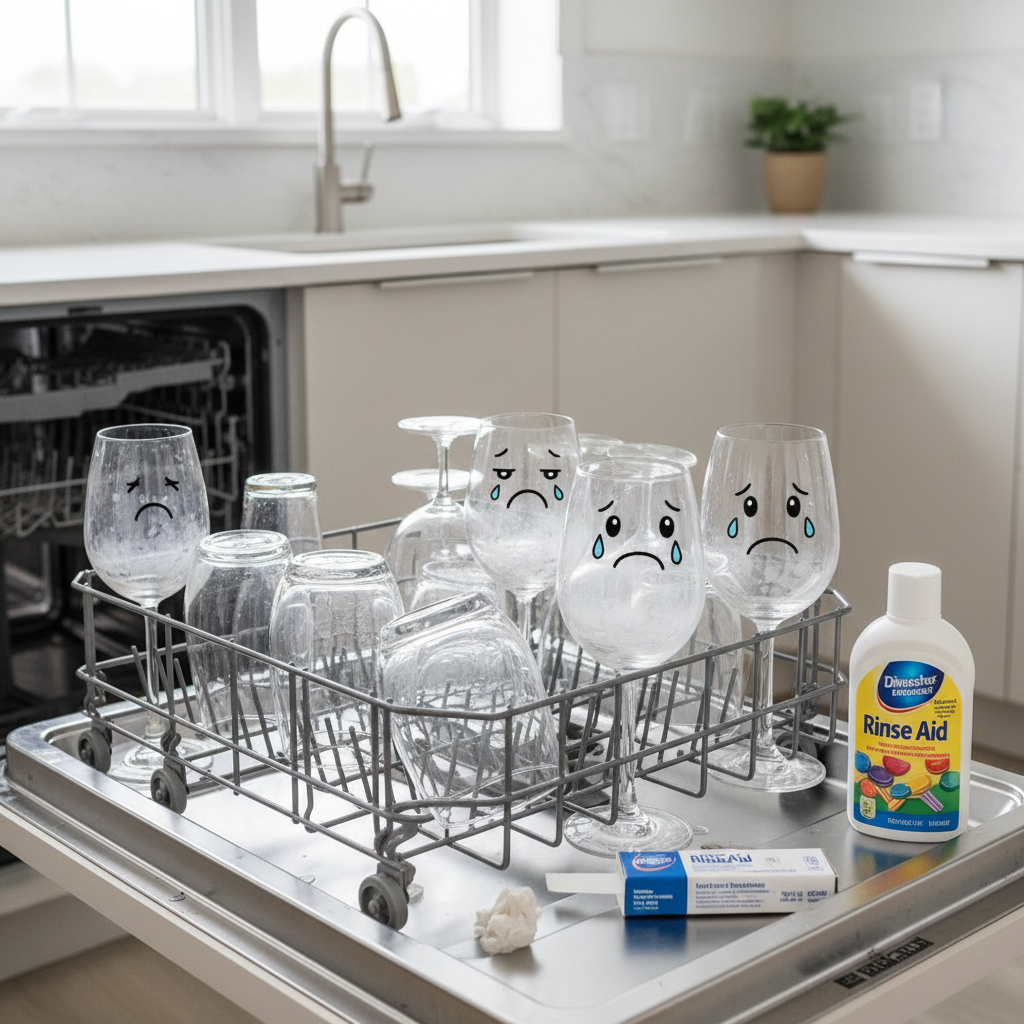
…and instead you’re greeted by a glass that looks like it just survived a dust storm?
You hold it up to the light like CSI: Kitchen Unit.
You rotate it. You squint. You whisper:
“Is this… spotting… or a cry for help?”
And that’s when your soul leaves your body—quietly—like, “I’m gonna head out.”
If this is you: welcome. You’re not messy. You’re not crazy.
You probably have hard water.
Why “Clean” Dishes Still Look Dirty
Here’s the simple science (no lab coat, no guilt trip):
Hard water contains minerals—mostly calcium and magnesium. When the dishwasher sprays hot water, then the water dries… those minerals don’t evaporate.
They stay behind.
On your:
- glasses (spots + cloudy film)
- plates (streaks)
- dishwasher (scale buildup)
- heating element (efficiency goes down)
- spray arms (clogs happen)
- your patience (gone)
So if your dishwasher “works” but your dishes still look like they’ve been through something… it’s usually the water.
The 3 Culprits Behind Spots (The Dishwasher Bermuda Triangle)
1) Mineral spots (the removable kind)
Little white dots or rings that wipe off with vinegar or a microfiber cloth? That’s usually minerals.
2) White film or haze (sometimes removable)
That foggy “why do my glasses look tired?” layer can be mineral film… or soap residue… or both.
3) Etching (the permanent heartbreak)
If the glass looks cloudy even when it’s dry and freshly polished, and it never improves—your glasses may be etched. That’s tiny surface damage caused by a combo of:
- very hot wash cycles
- harsh detergents
- soft water + too much detergent (yes, that happens too)
- long exposure over time
Spots can be fixed. Etching is forever.
(Which is rude, honestly.)
Quick Self-Test: Do You Have Hard Water?
If you’re a “just tell me what to do” person, do one of these:
- Test strips (fastest): Dip, match the color, done.
- Look for signs:
- spots on glasses
- crusty faucets/showerheads
- soap scum + tub ring
- stiff laundry
- If you want the clearest route: take our Water Health Check and we’ll point you to the right level for your home.
Because guessing at filters at 11:58 PM while holding a cloudy wine glass is not self-care.
Easy Wins (Do These Before You Buy Anything Big)
These are renter-friendly, budget-friendly, and sanity-friendly.
1) Add a rinse aid
Rinse aid helps water sheet off instead of forming droplets that dry into spots.
Look for: “dishwasher rinse aid” and follow bottle + dishwasher instructions.
2) Clean the dishwasher filter (yes, it has one)
Most people don’t know there’s a filter.
Most filters look like they’ve seen things.
- Pull it out (usually twists out at the bottom)
- Rinse it
- Light scrub if needed
- Put it back
This alone can improve results.
3) Run a descaling/cleaning cycle monthly
Hard water leaves scale inside the machine.
Options:
- citric acid cleaner
- dishwasher descaler tablets
This helps:
- reduce film
- improve spray strength
- extend appliance life
4) Try a dishwasher-safe “softening” additive
These can help reduce mineral issues in the wash cycle—especially for renters who can’t change plumbing.
Search terms:
- “dishwasher water softener additive”
- “hard water dishwasher booster”
(Just follow directions carefully.)
5) Detergent + settings check (small tweak, big difference)
- Too much detergent can cause film.
- Super hot cycles can contribute to etching over time.
- If your water is hard, you may need a detergent that performs better in hard water.
When It’s Time for the Real Fix (Especially Homeowners)
If you’re doing all the tricks and your glasses still look like they need therapy… the issue isn’t your dishwasher.
It’s the water entering your home.
Hardness affects:
- dishwasher + dishes
- showers + skin
- laundry + clothes
- pipes + water heater
- fixtures + everything you clean
The long-term solution: Whole-home hardness treatment
For many homeowners, a properly sized solution can:
- reduce spotting + scale
- protect appliances
- make cleaning easier
- improve how water “feels” for bathing
And if you’re thinking, “Okay, but I don’t want to overbuy,”—same.
That’s why we don’t start with a sales pitch. We start with clarity.
“What Should I Do for My House?”
This is where most people get stuck.
Because you’re not just dealing with dishes—you’re dealing with:
- your home type (rent vs own)
- your budget
- how hard your water actually is
- whether you want a quick win or a long-term fix
Take the Water Health Check
In a few minutes, we’ll help you map your home to the right path:
- Renter Essentials (easy upgrades that move with you)
- Ultimate Renter Essentials (first serious step toward better water)
- Homeowner Essentials (whole-home comfort + appliance protection)
Then, if you want a human guide, book a consultation and we’ll help you choose the right solution—without the overwhelm.
Because you deserve dishes that look clean when they’re clean.
The One-Liner Truth
If your dishwasher leaves spots, it’s not a personality flaw.
It’s usually hardness + minerals + scale doing what minerals do.
Laugh at the CSI glass inspection if you want.
Then take one step:
- Try rinse aid + test strips
- Clean/descale the dishwasher
- Take the Water Health Check
- Book a consult if you want the fastest path to “fixed”
Your soul can come back now.